
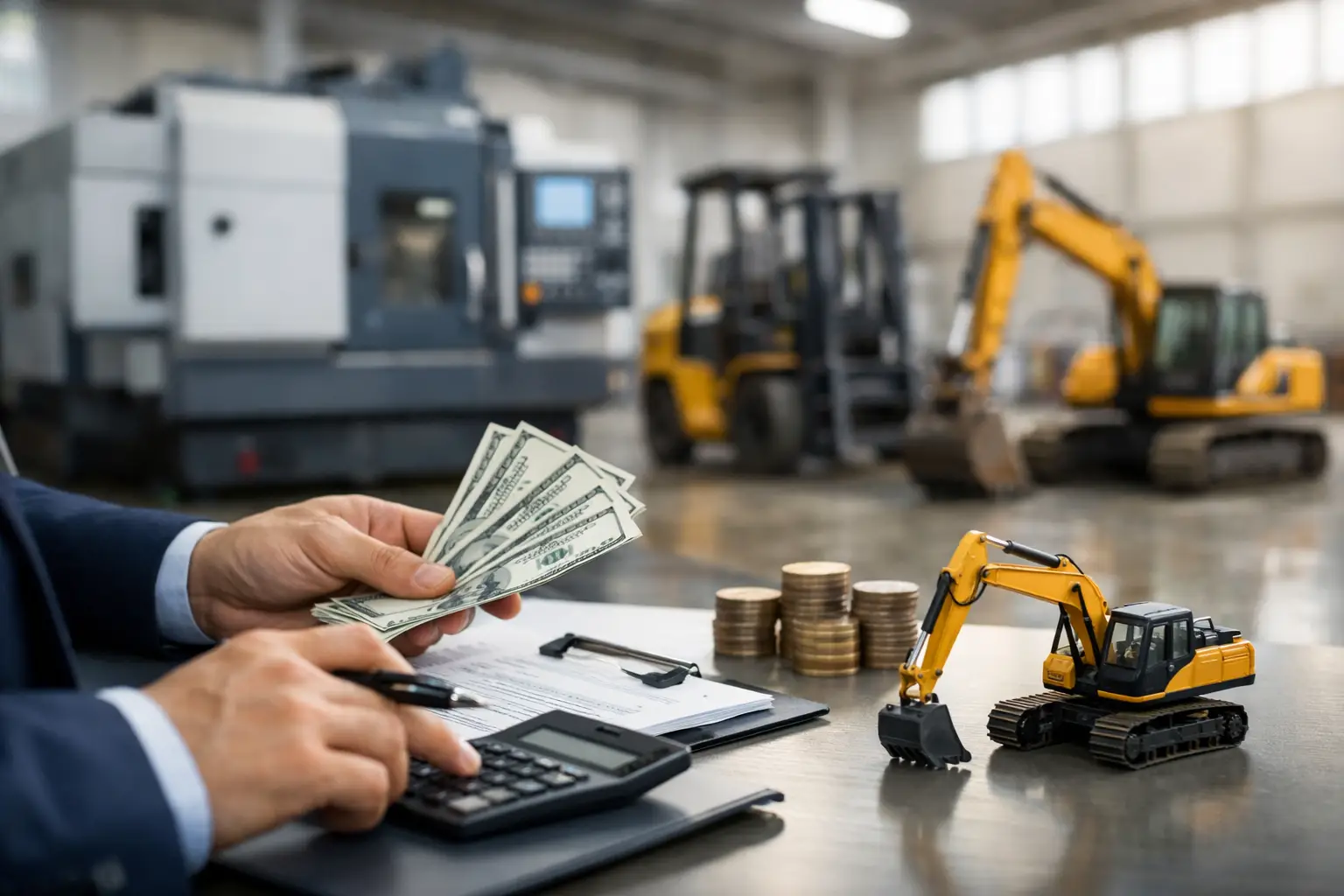
A used excavator, CNC machine, commercial oven, or dental system can put real capacity into your business without the price tag of a new asset. The catch is that sellers often want payment quickly, while your cash still has payroll, inventory, and operating expenses to cover. Knowing how to finance used machinery helps you make the purchase without putting day-to-day operations under pressure.
The right financing structure depends on the equipment, its remaining useful life, your business cash flow, and how fast the purchase needs to close. A low monthly payment may look attractive, but it is only a win if the term, total cost, and equipment condition make sense for your operation.
Before comparing lenders, get specific about what you are buying. Lenders want more than a rough estimate of “a used machine.” They generally need the make, model, year, serial number, purchase price, seller information, and photos or an invoice. For larger purchases, they may also ask for maintenance records, an appraisal, or an inspection report.
This information affects both approval and terms. A well-maintained, recognizable machine with an active resale market is easier to finance than specialized equipment with limited demand. A five-year-old skid steer from a major manufacturer may be a straightforward collateral asset. A highly customized production machine can still be financeable, but the lender may require more documentation, a shorter term, or a larger down payment.
Be honest about the machine’s working life. Financing a piece of equipment for longer than it is likely to remain productive can leave you making payments after the asset has become a repair problem. If your team expects to replace the machine in three years, a seven-year term may lower the monthly payment but may not be the best business decision.
Equipment financing is often the most direct option for a used machinery purchase. The machinery generally serves as collateral, and the lender pays the seller or provides funds for the acquisition. Because the asset supports the financing, this route can preserve cash and may offer more manageable terms than using an unsecured product for the entire purchase.
The best structure depends on your goal.
Use equipment financing when the machinery itself is the central purchase. It is usually a strong fit for established assets with clear value, such as construction equipment, manufacturing machines, medical equipment, restaurant equipment, and fleet-related machinery. Terms vary based on the asset’s age, condition, price, and expected useful life, along with your business profile.
A down payment may be required, especially for older assets or equipment purchased through a private seller. That is not always a drawback. A reasonable down payment can reduce the financed balance, monthly payment, and lender risk.
A business term loan can be useful when the purchase includes more than the machine. For example, a contractor may need a used loader, attachments, transport costs, and cash to cover labor until the next project billing cycle. A term loan can provide flexibility if equipment-only financing does not cover those related expenses.
The trade-off is that the loan may not be secured solely by the machine. Rates, repayment terms, and approval requirements can differ from equipment financing. Compare the total cost and make sure the payment fits your normal revenue cycle, not just your strongest month.
A business line of credit is usually better for the expenses around the machinery than for a large, one-time equipment purchase. It can help cover a deposit, delivery, repairs, installation, initial materials, or a short cash-flow gap while the new capacity begins producing revenue.
Using a line of credit for the full purchase can make sense in limited situations, particularly when the price is lower and you expect to repay quickly. For a major asset with a multiyear useful life, dedicated equipment financing may create a better match between the payment schedule and the value you receive from the machine.
For larger purchases or broader expansion plans, SBA financing or asset-based lending may be worth evaluating. These options can support machinery alongside real estate, inventory, receivables, or other business needs. They can also involve more documentation and a longer process. If a seller needs to close this week, a faster equipment-focused option may be more practical.
The purchase price is only part of the number. Used machinery can be a smart value, but it may come with costs that new equipment does not. Build a full acquisition budget before you apply.
Include taxes, freight, rigging, installation, software, attachments, inspection fees, insurance, and immediate repairs. If the machine will sit idle while a technician sets it up or permits are approved, include that delay in your cash-flow forecast too.
Then estimate the machine’s monthly impact. Will it let you take on more jobs, reduce subcontractor costs, increase production speed, or replace unreliable equipment that causes downtime? Put a conservative dollar amount next to that benefit. A payment should be supported by realistic operating gains, not only the hope that demand will appear.
For seasonal businesses, payment timing matters as much as payment size. A landscaping company buying machinery before the busy season may need a structure that does not strain the slower winter months. A manufacturer with steady contracts may prioritize a predictable fixed payment. There is no single best term. There is only the term that works with your business’s actual cash flow.
Fast decisions start with organized information. You do not need to turn a financing request into a weeks-long bank project, but incomplete details can slow down even a strong application.
Have your business bank statements, basic business information, recent revenue figures, and equipment documentation ready. Lenders may review time in business, credit profile, monthly revenue, existing debt, and the asset itself. They are assessing whether the business can repay and whether the machinery has sufficient value if something goes wrong.
At Real Fast Funds, established businesses may qualify to explore options with at least one year in business, $20,000 in monthly revenue, and a 550 FICO score. Those are starting thresholds, not a guarantee of approval. Final rates, terms, and eligibility depend on lender underwriting, the requested amount, and the details of the purchase.
If your credit is not perfect, do not assume financing is off the table. Strong revenue, a clear use of funds, a reasonable equipment price, and a solid payment history can all help support a request. At the same time, expect the available terms to reflect risk. A higher rate or down payment may still be worthwhile if the machine solves an urgent production bottleneck and produces a clear return.
Do not let urgency replace due diligence. Ask the seller for the serial number and verify ownership, liens, maintenance history, hours of use, and any known defects. For higher-value machinery, an independent inspection is often money well spent. A low purchase price loses its appeal quickly if the machine needs a major repair in the first month.
Review the financing agreement with the same care. Confirm the amount financed, payment frequency, term length, interest or factor rate structure, fees, down payment, prepayment terms, insurance requirements, and whether a personal guarantee is required. Ask what happens if delivery is delayed or the equipment does not match the seller’s description.
It is also smart to avoid funding more than the equipment and related costs justify. Extra capital can feel useful in the moment, but it raises the repayment burden. If you need separate working capital, structure that need clearly instead of burying it inside an equipment purchase.
A good used-machinery deal can disappear quickly, especially when the equipment is in working condition and priced fairly. The answer is not to skip your review. It is to do the key work early: define the asset, document the seller, calculate the true cost, and choose financing that leaves operating cash available.
The best purchase is not simply the machine with the lowest price or the financing with the lowest advertised payment. It is the one that keeps your business productive, protects your cash position, and gives the equipment time to earn its place in your operation.